


Uses of GI Cold Dip Binding Wire
If you’ve ever been to a construction site, you’ve probably seen workers tying steel bars together with a thin wire. It doesn’t look like much, but that wire is actually doing an important job. That’s what we call GI cold dip binding wire.
It’s one of those materials people don’t really talk about, but without it, a lot of work would become difficult or messy. In this blog, let’s just go through what it is, where it’s used, and why it’s still so common everywhere.
What is GI Cold Dip Binding Wire?
In simple words, it’s an iron wire with a moderate coating of zinc on it. That zinc coating helps protect it a bit from rust.
The “cold dip” part means the coating is thinner compared to other types like hot-dip. Because of that, the wire stays soft and easy to bend.
That’s actually the main reason people use it — it’s easy to handle.
Why Do People Use It So Much?
The biggest reason is simple: it gets the job done without any complications.
Workers don’t need any special tools to use it. They can just cut it, twist it, and tie things quickly.
Also:
- It’s not very expensive
- It’s easily available
- It works fine for most basic binding work
So naturally, it becomes a go-to option.
Where is GI Cold Dip Binding Wire Used?
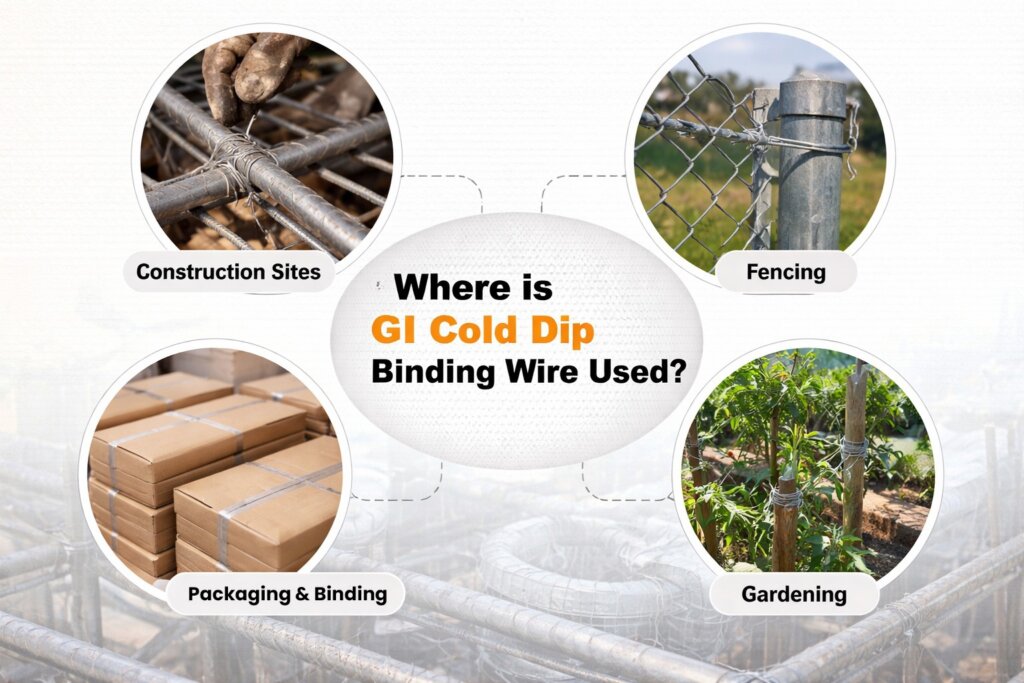
You’ll find this wire in more places than you might expect.
1. Construction Work
This is the most common use.
Before concrete is poured, steel bars (TMT bars) need to be tied together so they don’t move. Binding wire is used for that.
Workers use it to:
- Tie bars in slabs and columns
- Keep the structure in place
- Make sure everything stays aligned
It’s simple but very important. If the bars move, the whole structure can be affected.
2. Packing and Bundling
In many warehouses or factories, this wire is used to tie things together.
Like:
- Bundling metal rods
- Holding pipes together
- Securing materials during transport
It’s strong enough to hold things, but still easy to remove later.
3. Farming and Outdoor Work
Farmers also use binding wire for small tasks.
For example:
- Supporting plants
- Fixing fences
- Tying bamboo or wooden sticks
It’s not fancy, but it works.
4. Small Household Uses
At home too, people use it sometimes.
Like:
- Temporary fixes
- Hanging things
- Basic repair work
It’s one of those things you don’t think about until you need it.
5. Industrial Use
In factories, it’s used for temporary setups or organizing materials.
Not for heavy work, but for quick fixing, it’s useful.
Benefits of GI Cold Dip Binding Wire
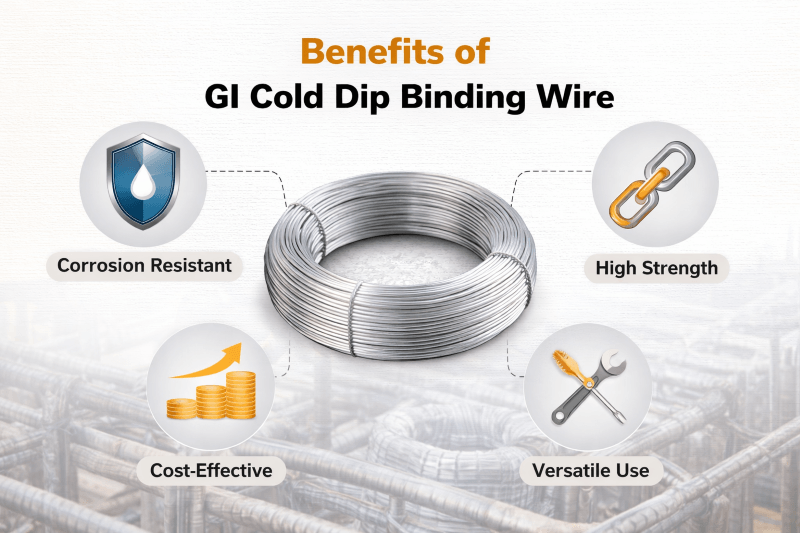
There are a few reasons why people keep using it again and again.
Easy to Use
This is probably the biggest advantage. You can bend it, twist it, cut it — no problem.
Affordable
Compared to other wires, it’s cheaper. So for large projects, it helps save cost.
Flexible
It doesn’t break easily when you twist it. That makes it practical for daily use.
Basic Rust Protection
It has a zinc coating, so it doesn’t rust immediately. But still, it’s not meant for long-term outdoor exposure.
Things to Keep in Mind
It’s good, but it’s not perfect.
- Not ideal for long-term outdoor use
- Coating is thin, so rust can happen over time
- Not meant for heavy load or structural strength
So it’s better to use it only where it makes sense.
Why It Still Matters in Construction
Even though it’s a small item, it plays a big role.
Without proper binding:
- Steel bars can shift
- Structure alignment can go wrong
- Work becomes slower
So even though it looks basic, it’s actually very important for smooth work.
One More Important Thing
Binding wire helps hold things together temporarily, but the real strength of any construction comes from good quality steel.
If the steel itself is not strong, then no amount of binding will help.
That’s why using reliable materials is important.
Sunvik Steels Pvt Ltd provides good quality TMT bars that are used in construction for strong and stable structures. Their steel is designed to handle load and give long-term durability.
You can check more about them here: https://sunviksteels.com/
Conclusion
GI cold dip binding wire is simple, affordable, and useful. It may not look important, but it plays a role in almost every construction project.
From tying steel bars to small daily uses, it does its job without any fuss.
If you’re working on a project, knowing where to use it and where not to use it can actually make your work easier.
FAQs
1. What is GI cold dip binding wire?
It is a thin iron wire with a light zinc coating used for tying and binding.
2. Where is it mostly used?
Mainly in construction for tying steel bars.
3. Is it strong?
It’s strong enough for binding work, but not for heavy structural use.
4. Does it rust?
It has some protection, but over time it can rust.
5. Can it be used outside?
Yes, but only for short-term use.
6. Is it expensive?
No, it’s quite affordable.
7. What sizes are available?
It comes in different gauges depending on the need.
8. Can I reuse it?
Usually not, because it gets twisted while using.
9. Why not use thicker wire?
Thicker wire is harder to bend and not practical for binding.
10. Is it better than plastic ties?
For construction, yes. It’s stronger and more reliable.


