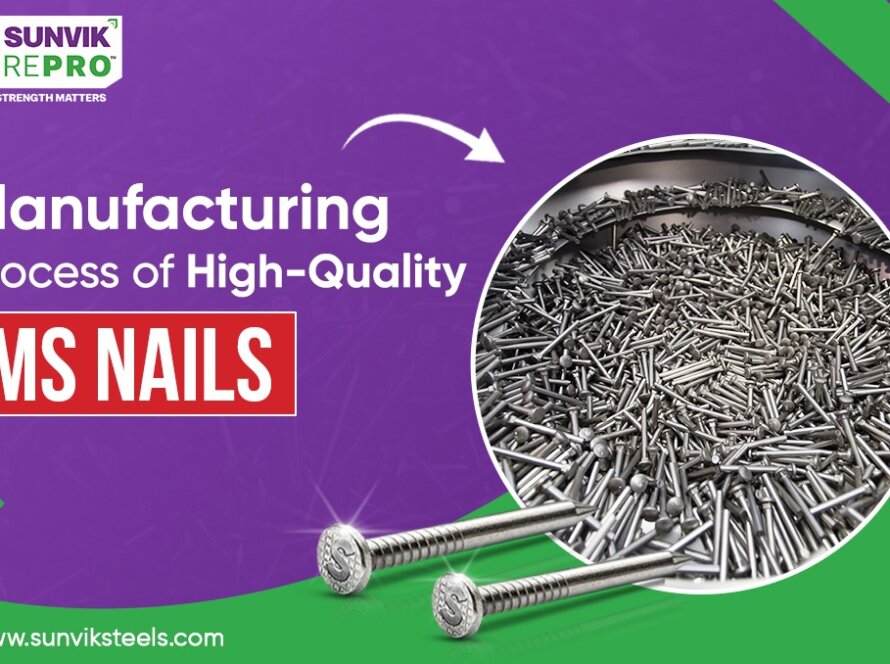
What Are MS Nails? Types, Sizes, and Applications
In the world of construction, hardware, and general maintenance, nails are among the simplest yet most essential tools. Among the various types available, MS nails stand out for their versatility, strength, and reliability. If you’ve ever wondered what MS nails are, why they are used so widely, and which types and sizes are most common, this blog has all the answers you need—explained in a clear, easy-to-understand way.
Whether you’re a builder, carpenter, or DIY enthusiast, understanding MS nails can make a big difference in choosing the right product for your project.
What Are MS Nails?
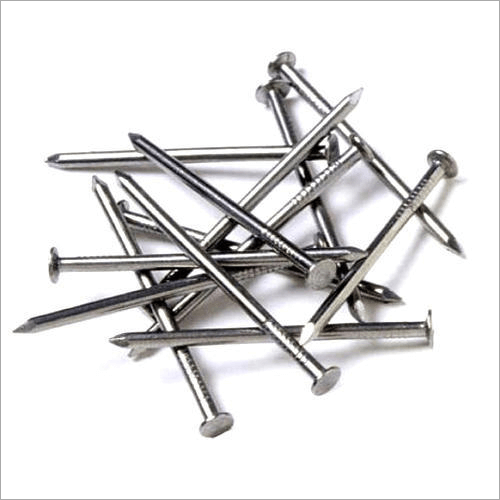
MS nails are nails made from Mild Steel (MS)—a commonly used type of steel known for its ductility, strength, and affordability. Mild steel contains a low percentage of carbon, making MS nails durable yet easy to shape and form. Unlike nails made from harder metals like stainless steel or galvanized steel, MS nails offer a perfect balance of strength and flexibility, which makes them suitable for a wide range of everyday applications.
In simple terms, MS nails are versatile general-purpose nails used across construction, carpentry, furniture making, and more.
Why Choose MS Nails?
MS nails are a preferred choice for many reasons:
- Strength: Offers good holding power for general fastening tasks.
- Affordable: Mild steel is cheaper than other metals like stainless steel.
- Easy to work with: Can be driven into wood and other materials with regular tools.
- Versatile: Suitable for many indoor and outdoor applications (with appropriate coatings).
Common Types of MS Nails
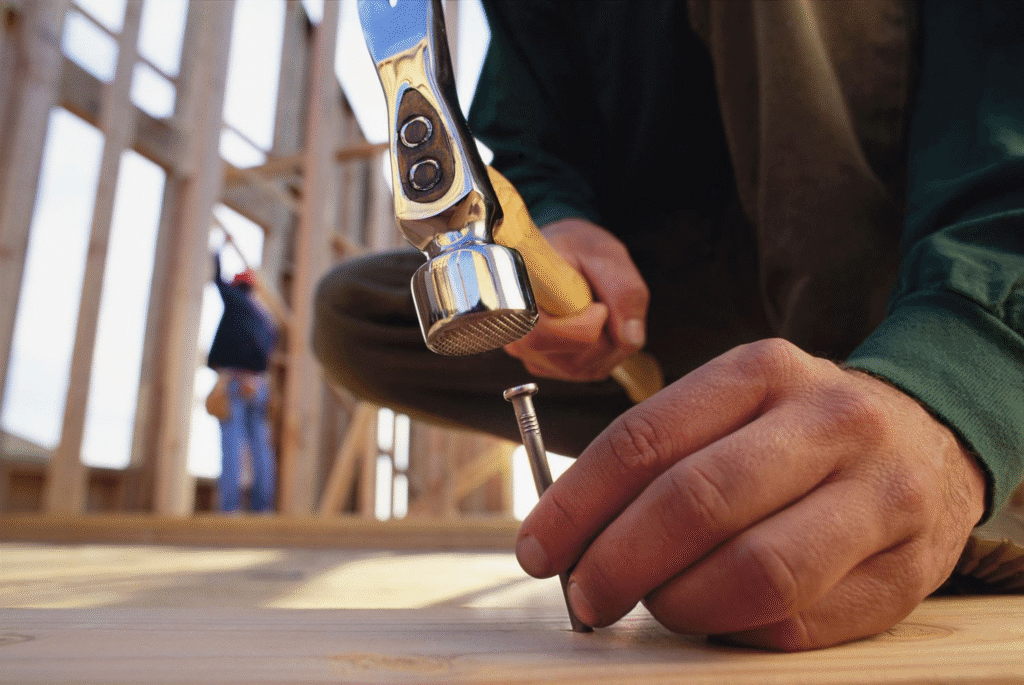
There are several types of MS nails, each designed for specific applications and requirements. Let’s explore the most commonly used ones:
1. Common Nails
These are the most basic type of MS nails. With a thick shank and a flat head, they are ideal for general construction and wood framing. They provide strong holding power and are widely used in heavy-duty applications.
2. Finishing Nails
Finishing nails have a smaller head that can be easily hidden below the surface of the wood. They are often used in finishing work where appearance matters, such as in furniture or trim installation.
3. Box Nails
Box nails are similar to common nails but have a thinner shank. This design reduces splitting in thinner or softer wood, making them useful for lighter construction tasks and carpentry.
4. Panel Pins
These are very thin nails used to attach small trim pieces, paneling, or lightweight materials where a larger nail would cause splitting or visible damage.
5. Clout Nails
Clout nails have a large, flat head and are used primarily for fixing sheet metal, roofing felt, or thin boards. Their larger head provides extra grip and prevents pull-through.
MS Nail Sizes Explained
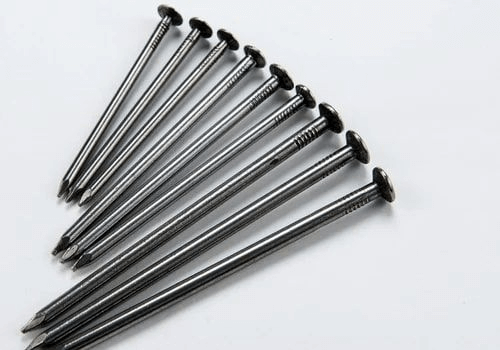
MS nails come in a variety of lengths and diameters to suit different applications. Nail size is usually expressed in terms of length (in millimeters or inches) and sometimes gauge or thickness.
Length
Common lengths range from small sizes like 0.5 inches or 0.9 inches for light fixtures to longer sizes like 1.9 inches or more for heavy structural work.
Diameter
The thickness of the nail determines its strength and holding capacity. Thicker nails are stronger but can split wood if not chosen correctly for the material.
Applications of MS Nails
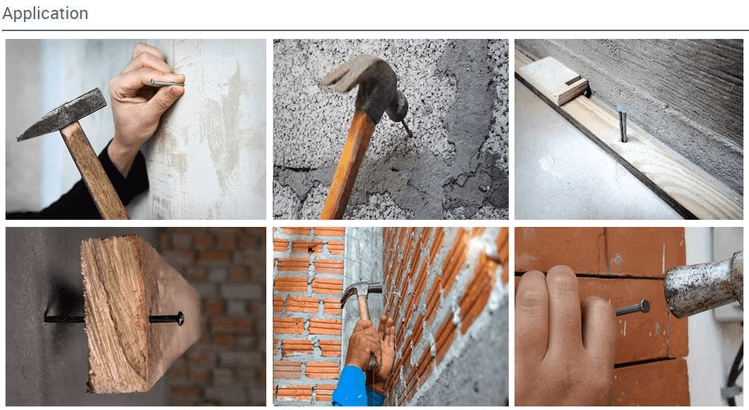
MS nails are incredibly versatile and can be used in a wide range of settings:
Construction and Carpentry
MS nails are widely used in wood framing, roof construction, wire fixing, shuttering, and general structural tasks. Their simplicity and strength make them a staple on construction sites.
Furniture Making
Furniture makers often use finishing and panel pins to attach trims, frames, and panels. MS nails offer a cost-effective solution without compromising basic strength.
General Household Use
From fixing loose boards and installing fixtures to hanging picture frames, MS nails are common in everyday home repairs.
Packaging and Crating
Heavy-duty MS nails are often used to secure wooden crates, pallets, and boxed goods before shipment.
Choosing the Right MS Nails for Your Project
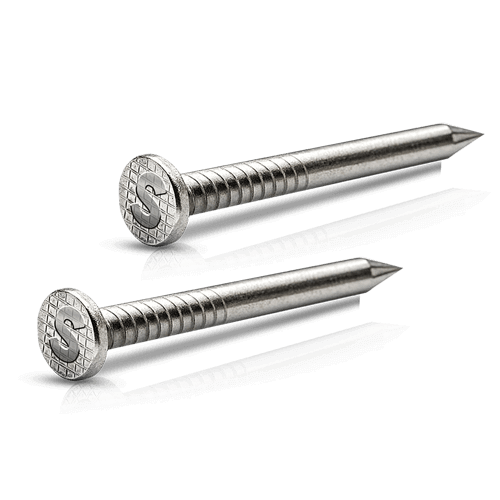
When selecting MS nails, consider the following:
- Purpose: What are you nailing—wood, metal, or thin sheet materials?
- Size: Choose the appropriate length and thickness based on material and application.
- Coating: For outdoor use, consider nails with protective coatings (such as zinc plating) to resist rust and weathering.
Why Quality Matters
Not all MS nails are created equal. High-quality nails have uniform shape, strength, and surface finish, making them easier to drive and more reliable in long-term use. Inferior nails may bend, break, or rust prematurely.
If you’re sourcing nails for construction or manufacturing, it’s worth choosing a trusted supplier.
Discover MS Nails at Sunvik Steels Pvt Ltd
For reliable, high-quality MS nails that meet diverse construction and industrial needs, Sunvik Steels Pvt Ltd offers a comprehensive range of products manufactured to precise standards. Whether you need nails for framing, finishing, furniture, or general fixes, Sunvik Steels delivers products you can depend on.
Visit sunviksteels.com to explore their range of MS nails and find the right solution for your project.
Frequently Asked Questions (FAQs)
1. What does “MS” stand for in MS nails?
MS stands for Mild Steel, a type of steel with low carbon content that is strong and easy to work with.
2. Are MS nails suitable for outdoor use?
Yes, but for outdoor use, it’s better to choose nails with protective coatings to resist rust and weathering.
3. What is the difference between common nails and finishing nails?
Common nails have a thicker shank and larger head for general construction. Finishing nails have a smaller head, ideal for trim and hide-in-place work.
4. Can MS nails be used on metal surfaces?
MS nails are typically used for wood and light materials. For metal-to-metal fastenings, other fasteners like screws or rivets are preferred.
5. How do I choose the right size of MS nails?
Select nail length and thickness based on the material you are fastening and the application requirements.
6. Do MS nails come in coated varieties?
Yes, some MS nails have coatings like zinc plating to improve corrosion resistance.
7. Can MS nails bend easily?
Quality MS nails are designed to be strong, but thinner nails can bend under excessive force or if not used correctly.
8. Where are MS nails commonly used?
They are used in construction, carpentry, furniture making, packaging, and general household repairs.
9. Are MS nails expensive?
MS nails are generally affordable, making them suitable for a wide range of projects without high cost.
10. Where can I buy quality MS nails?
You can find high-quality MS nails at Sunvik Steels Pvt Ltd — visit sunviksteels.com to explore product options.
Final Thoughts
Understanding MS nails—their types, sizes, and applications—can help you choose the right fastener for any project, whether it’s big or small. From construction sites to furniture shops and everyday household fixes, MS nails are practical and essential.
For trusted quality and a wide range of MS nails, check out Sunvik Steels Pvt Ltd and make your next project stronger and more reliable.
Contact Details:
- Email: mail@sunvik.in
- Phone Number: 080-23084700
- Ph: Customer Care Number: 07676104444
- Address: Sunvik Steels Pvt Ltd, MES Road, Bahubali Nagar, Jalahalli Village, Bangalore – 560 013, Karnataka, India