MS Nails for Wood, Concrete and Steel
Choosing the right construction material is important, even when it comes to something as simple as a nail. Many people spend time selecting cement, steel, or paint but pay very little attention to the nails they use. In reality, the wrong nail can reduce the strength of a connection, damage the material, or make installation more difficult.
MS (Mild Steel) nails are one of the most commonly used fastening products in construction, carpentry, furniture manufacturing, packaging, and industrial applications. However, not every MS nail is suitable for every surface. The nail that works perfectly for wooden furniture may not perform well in concrete or steel.
If you are confused about which MS nail to choose, this guide will help you understand the differences in a simple way.
What Are MS Nails?
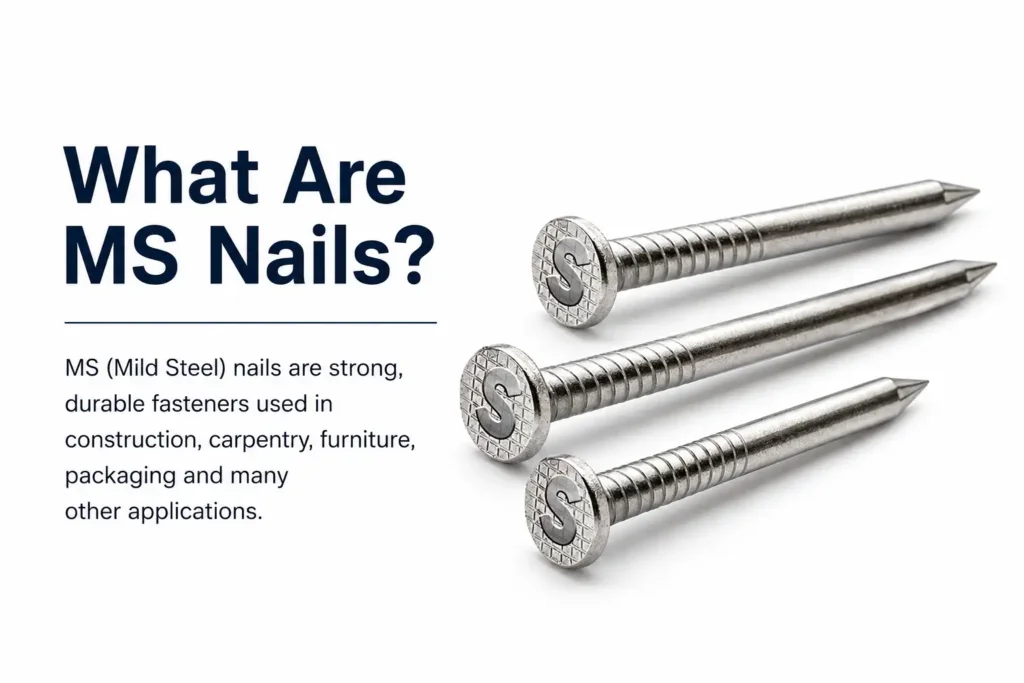
MS Nails are fasteners made from mild steel, a material known for its good strength, flexibility, and affordability. These nails are available in different lengths, diameters, and head designs to suit different construction and industrial needs.
They are widely used because they are easy to install, provide reliable holding strength, and are available in various finishes depending on where they will be used.
Why Choosing the Right Nail Matters
Many people assume that all nails work the same way. In practice, each surface behaves differently.
Wood expands and contracts with moisture.
Concrete is extremely hard and dense.
Steel requires specialized fastening methods because of its strength.
Using the wrong nail can lead to loose fittings, bent nails, cracked surfaces, or poor durability.
Choosing the correct nail saves both time and money.
Choosing MS Nails for Wood
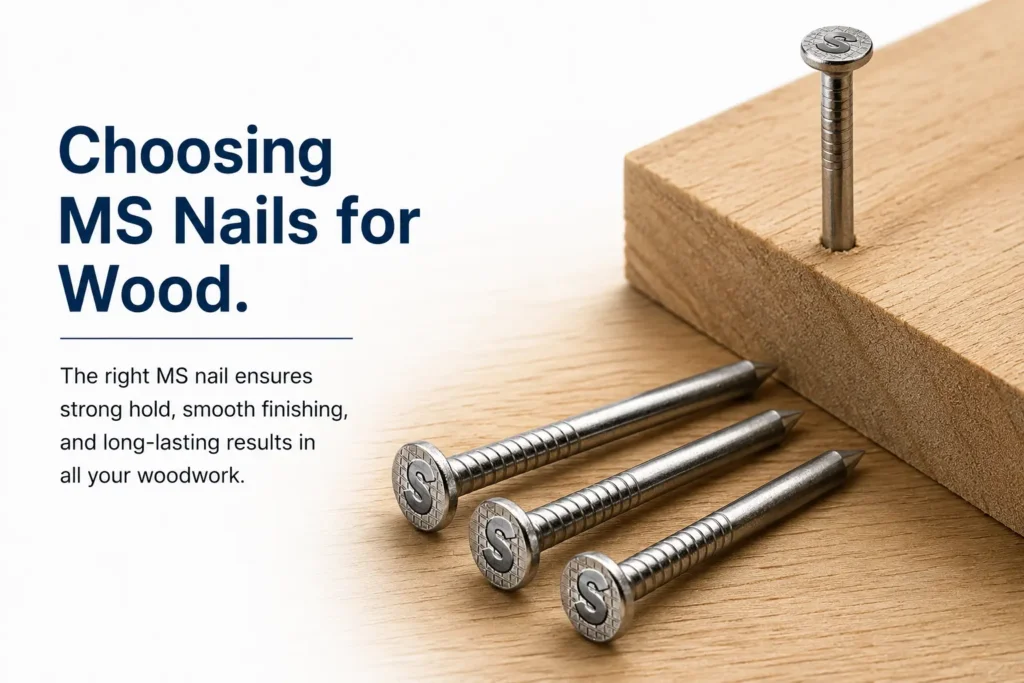
Wood is one of the easiest materials to work with, but different types of wood require different nails.
Softwood usually accepts standard MS nails without much effort.
Hardwood may require stronger nails with slightly thicker shanks for better grip.
When working with wooden furniture or wooden structures, consider:
- Nail length should be about two to three times the thickness of the wooden board.
- Avoid extremely thick nails for thin wood because they may split the surface.
- Select nails with smooth finishing for neat installation.
For furniture, cabinets, wooden doors, pallets, and packing boxes, standard MS nails are usually a reliable choice.
Choosing Nails for Concrete
Concrete is much stronger than wood. Ordinary nails generally cannot penetrate concrete properly.
For concrete applications, hardened concrete nails or specially manufactured heavy-duty MS nails are recommended.
These nails usually feature:
- High hardness
- Thick shank
- Sharp point
- Better resistance against bending
They are commonly used for:
- Wall fixing
- Concrete flooring
- Masonry work
- Brick walls
- Cement blocks
If the concrete is very hard, drilling pilot holes before fixing may be necessary.
Different Types of MS Nails
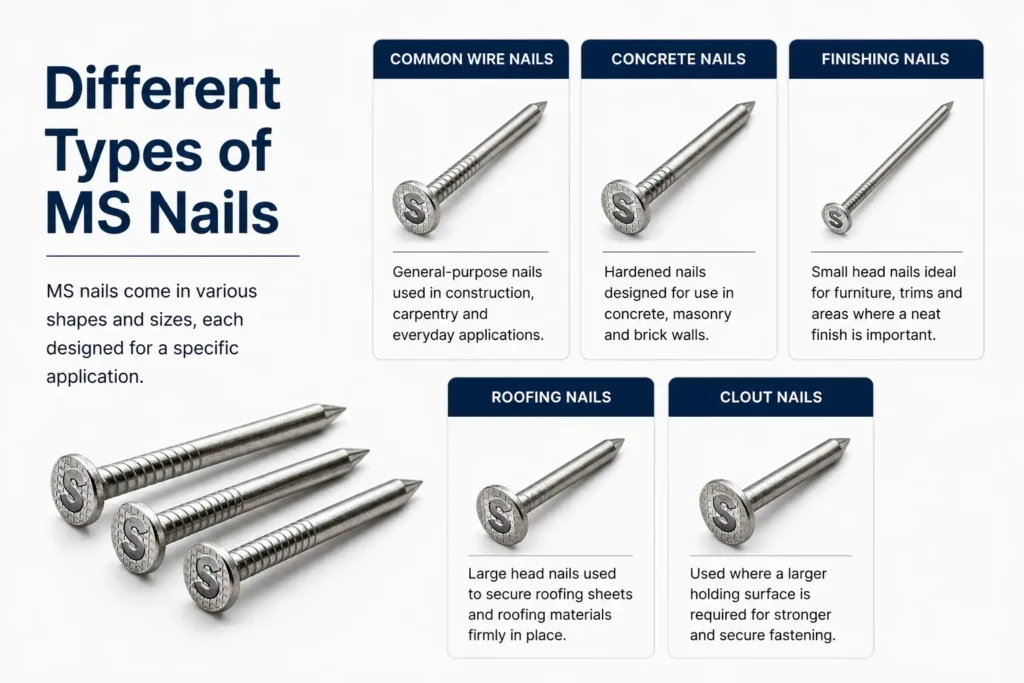
Understanding the basic types makes selection much easier.
Common Wire Nails
These are general-purpose nails used in wooden construction, furniture, packaging, and everyday carpentry.
Concrete Nails
Designed for masonry and concrete surfaces with higher hardness and better penetration.
Finishing Nails
These have small heads that become almost invisible after installation, making them suitable for furniture and decorative woodwork.
Roofing Nails
Roofing nails feature larger heads that help hold roofing sheets and materials securely.
Clout Nails
Commonly used where larger holding surfaces are required.
Factors to Consider Before Buying MS Nails
Material Thickness
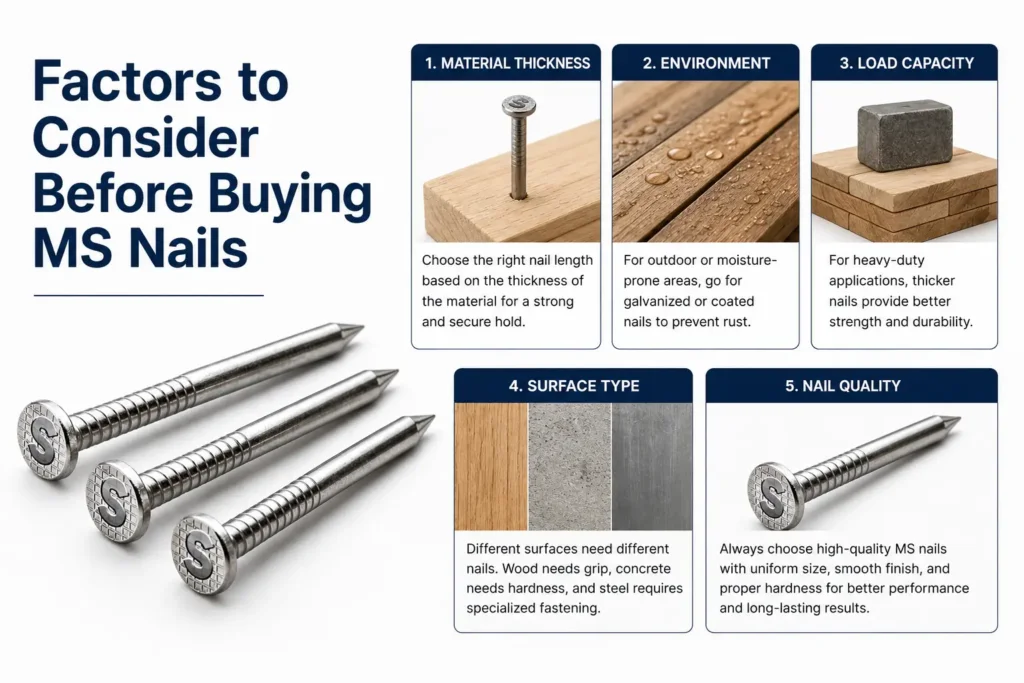
Always choose a nail length suitable for the thickness of the material.
A nail that is too short provides poor grip.
A nail that is too long may damage the opposite side.
Environment
If the nails will be used outdoors, moisture becomes an important factor.
In such cases, galvanized or coated nails provide better protection against rust.
Load Capacity
For heavy-duty applications, thicker nails provide better holding strength than thinner ones.
Surface Type
Every surface behaves differently.
Wood needs grip.
Concrete needs hardness.
Steel requires specialized fastening.
Choosing according to the surface always gives better results.
Common Mistakes People Make
Many installation problems happen because of simple mistakes.
Some common ones include:
- Using wood nails on concrete.
- Choosing nails that are too short.
- Ignoring nail thickness.
- Buying low-quality nails to save money.
- Using indoor nails for outdoor applications.
Avoiding these mistakes improves both safety and durability.
How Good Quality MS Nails Make a Difference
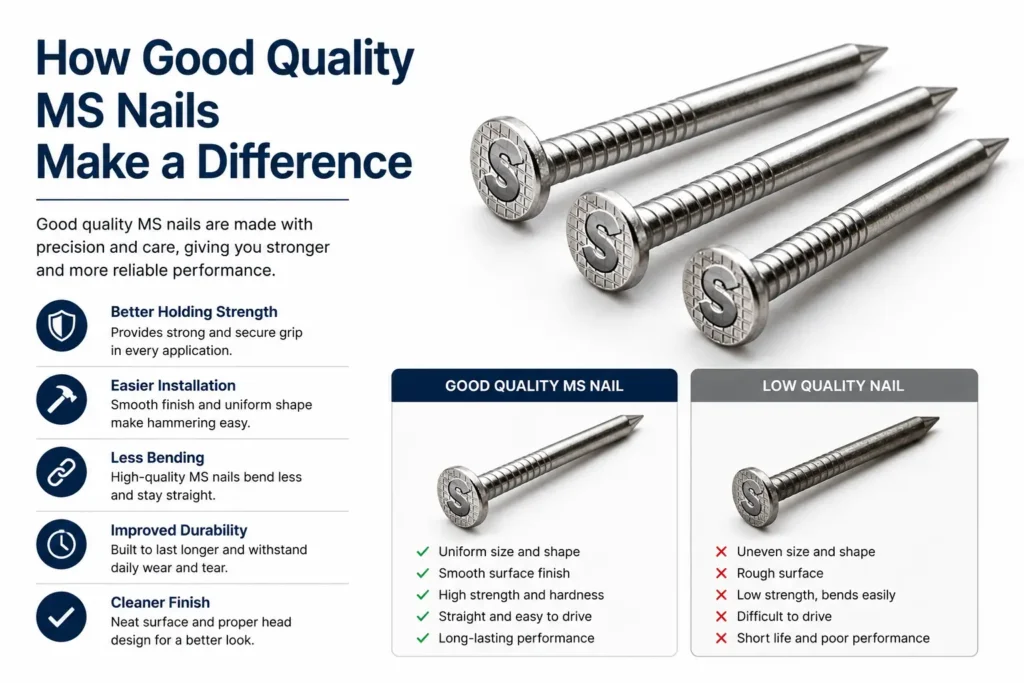
Quality nails are manufactured with proper dimensions, uniform thickness, and better finishing.
Good-quality MS nails usually provide:
- Better holding strength
- Easier installation
- Less bending during hammering
- Improved durability
- Cleaner finish
Although they may cost slightly more, they often reduce installation problems and replacement costs.
Industries That Use MS Nails
MS nails are used across many industries, including:
- Residential construction
- Commercial buildings
- Furniture manufacturing
- Wooden packaging
- Pallet manufacturing
- Interior decoration
- Roofing
- Carpentry workshops
- Agricultural structures
Because of their versatility, they remain one of the most widely used fastening products.
Final Thoughts
Choosing the right MS nail is not difficult once you understand the surface you are working with. Wood, concrete, and steel each require different fastening solutions, and selecting the correct nail improves both safety and durability.
Instead of buying nails based only on price, focus on quality, application, and material compatibility. A small decision at the beginning of a project can prevent expensive repairs later.
Whether you are building furniture, constructing a house, or handling industrial work, using the right MS nails helps ensure stronger and longer-lasting results.
Frequently Asked Questions
No. Wood and concrete have different hardness levels. Concrete usually requires specially hardened nails.
The ideal size depends on the thickness of the wood. Generally, the nail should be about two to three times the thickness of the material being joined.
Standard MS nails may rust outdoors. For outdoor applications, galvanized or coated nails are a better choice.
Look for uniform size, smooth finish, proper hardness, and consistent manufacturing quality. Good-quality nails bend less and provide stronger holding power.
Looking for High-Quality MS Nails?
If you’re searching for reliable construction materials, Sunvik Steels Pvt Ltd supplies high-quality steel products trusted across various industries. Along with premium TMT bars, Sunvik also offers dependable construction solutions designed to meet the needs of builders, contractors, manufacturers, and industrial projects.
Explore the complete range of products at https://sunviksteels.com/ and choose quality materials that deliver long-lasting performance for every project.