


Wire Rod for Industrial and Construction Applications
Wire rods are one of those products that often go unnoticed, yet they play an important role in countless industries. From construction sites and manufacturing units to fencing, fasteners, and wire products, a good-quality wire rod forms the base for many applications. Choosing the right wire rod is not just about selecting the right size—it is about ensuring strength, consistency, durability, and long-term performance.
If you’re planning to purchase wire rods for industrial or construction use, understanding a few key factors before buying can save both time and money. This guide explains everything you need to know in simple terms.
What Is a Wire Rod?
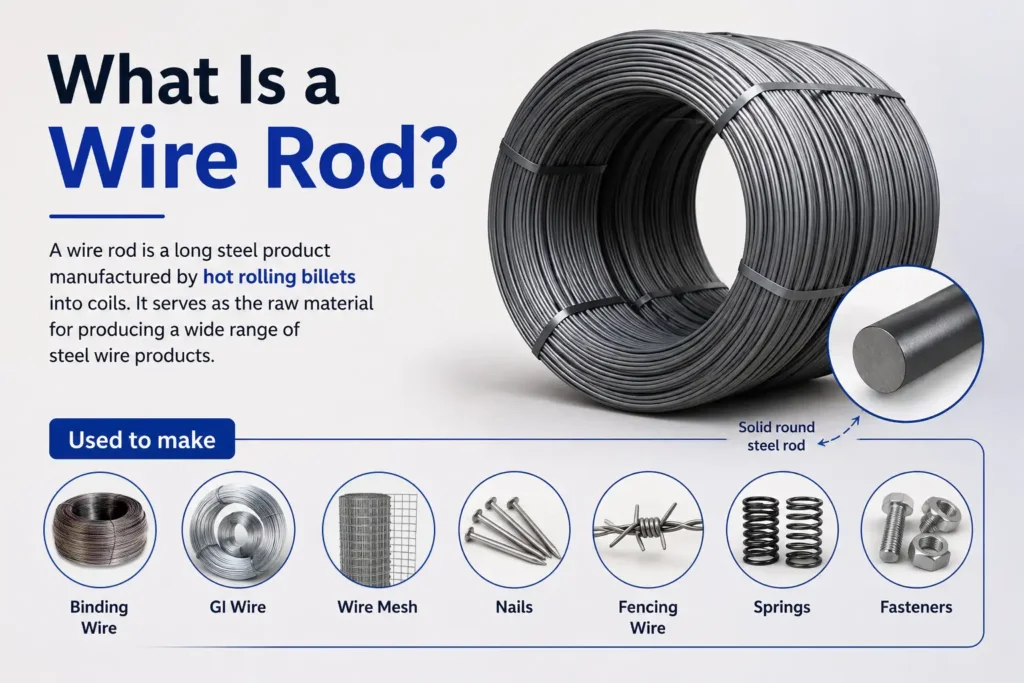
A wire rod is a long steel product manufactured by hot rolling billets into coils. It serves as the raw material for producing a wide range of steel wire products, including binding wire, GI wire, welding wire, wire mesh, nails, fencing wire, springs, fasteners, and many other industrial components.
Since it is the starting material for so many products, the quality of the wire rod directly affects the quality of the finished product.
Why Certifications Matter When Buying Wire Rod
One of the easiest ways to judge the quality of a wire rod is by checking whether it comes from a certified manufacturer. Quality certifications indicate that the manufacturer follows defined production processes, testing procedures, and quality control measures.
When purchasing wire rods for industrial or construction applications, always ask the supplier about their certifications. A manufacturer with recognized certifications is generally more committed to maintaining consistent product quality.
Look for manufacturers that have:
- ISO-certified manufacturing facilities
- BIS/ISI certification (where applicable)
- Regular product testing and quality inspection
- Compliance with relevant Indian Standards
Choosing certified manufacturers helps reduce the risk of receiving inconsistent material and provides greater confidence in the product’s performance.
Understand Your Application First
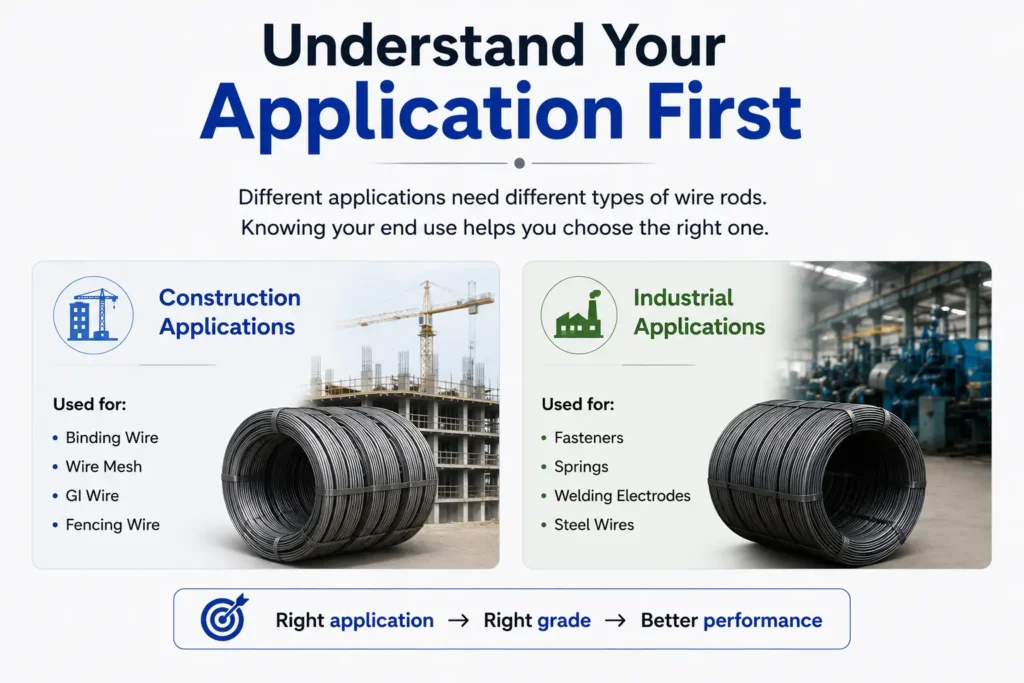
Before selecting a wire rod, identify its final use.
Different industries have different requirements.
Construction Industry
Wire rods are commonly used for manufacturing:
- Binding wire
- Wire mesh
- GI wire
- Reinforcement accessories
- Nails
- Fencing wire
Construction applications usually require products with good strength, flexibility, and corrosion resistance.
Industrial Manufacturing
Industries use wire rods to manufacture:
- Fasteners
- Springs
- Welding electrodes
- Steel wires
- Industrial mesh
- Automobile components
Industrial applications often demand tighter quality control and consistent mechanical properties.
Check the Steel Grade
The steel grade determines the strength and performance of the wire rod.
Different grades are designed for different purposes.
When purchasing wire rods, always ask the supplier about:
- Chemical composition
- Carbon content
- Mechanical properties
- Applicable quality standards
Choosing the correct grade improves the quality of the finished product and reduces manufacturing issues.
Pay Attention to Surface Quality
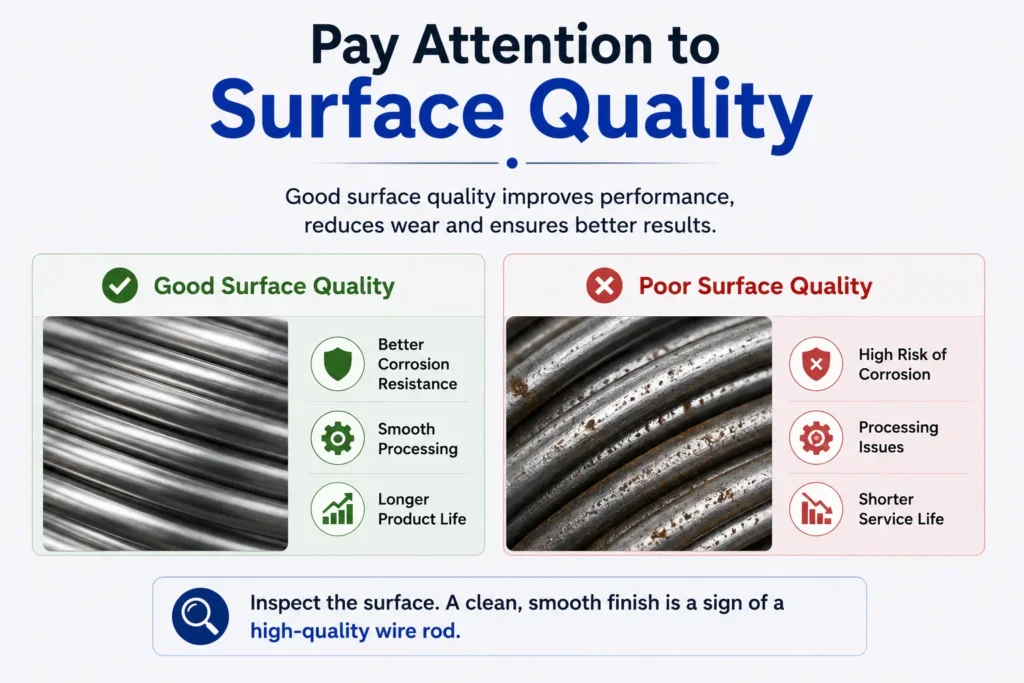
The surface of the wire rod should be clean and uniform.
A poor-quality surface may create problems during drawing, coating, or fabrication.
Inspect for:
- Rust
- Cracks
- Surface defects
- Scale formation
- Uneven finish
A smooth surface generally indicates better manufacturing quality.
Consider Diameter Accuracy
Wire rods are available in different diameters depending on the application.
Consistent diameter is important because variations may affect production efficiency and increase material waste.
Always verify that the product meets the required dimensional tolerances.
Evaluate Strength and Ductility
Both strength and flexibility are important.
A wire rod should be strong enough to withstand load while remaining flexible enough for bending, drawing, or shaping.
This balance becomes especially important in products such as:
- Binding wire
- Springs
- Wire mesh
- Industrial wire products
Look for Manufacturing Consistency
Consistency is often overlooked during purchasing.
A reliable manufacturer maintains uniform quality across every coil.
Consistent wire rods help manufacturers by reducing:
- Machine downtime
- Product rejection
- Wire breakage
- Production delays
This ultimately lowers operating costs.
Check Compliance with Industry Standards
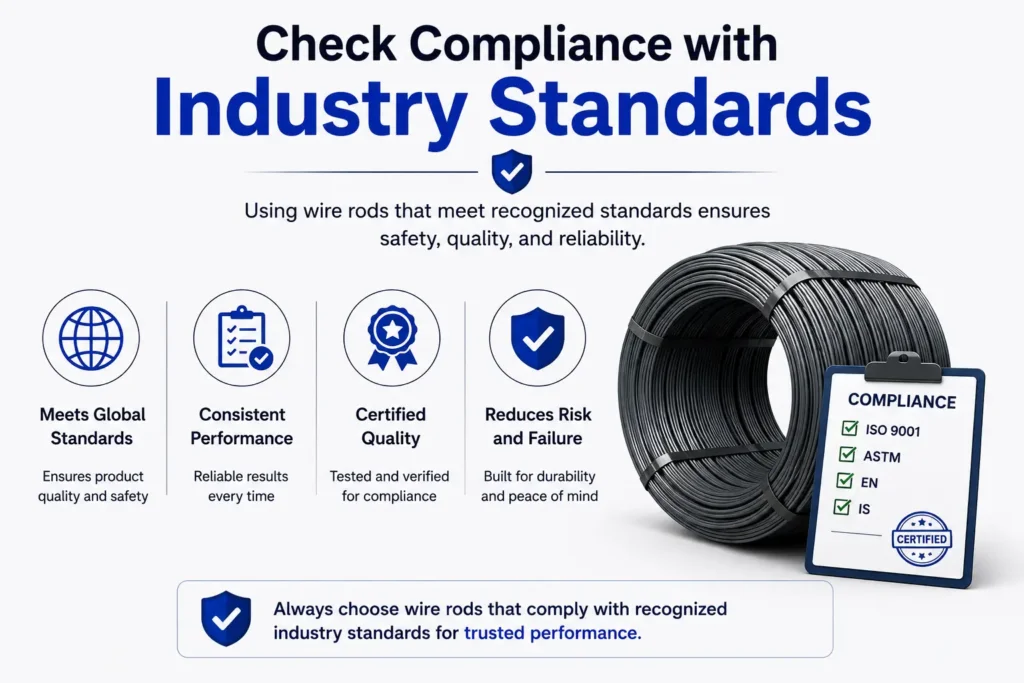
Buying products that comply with recognized quality standards provides additional confidence.
Quality-certified manufacturers generally follow strict production and testing procedures to maintain consistent product performance.
Always ask whether the wire rods are tested before dispatch.
Consider Corrosion Resistance
For outdoor or humid environments, corrosion resistance becomes an important factor.
If the wire rod will be used for products like GI wire or PVC-coated wire, the base material should be suitable for galvanizing or coating.
This improves the life of the final product and reduces maintenance costs.
Choose a Reliable Manufacturer
The manufacturer plays an important role in product quality.
A trusted manufacturer generally offers:
- Consistent quality
- Proper testing
- Reliable supply
- Better customer support
- Industry experience
Instead of selecting only on price, consider long-term reliability and product performance.
Common Mistakes Buyers Should Avoid
Many buyers make purchasing decisions based only on cost.
Some common mistakes include:
- Ignoring product specifications
- Choosing the cheapest option
- Not checking quality certifications
- Buying from unreliable suppliers
- Overlooking surface quality
- Ignoring application requirements
These mistakes often result in higher expenses later due to poor product performance.
Storage Tips for Wire Rods
Proper storage helps maintain product quality before use.
Keep wire rods:
- In a dry and covered area
- Away from standing water
- Protected from excessive moisture
- On raised platforms instead of directly on the ground
Good storage practices reduce the chances of rust and contamination.
Future of Wire Rod Applications
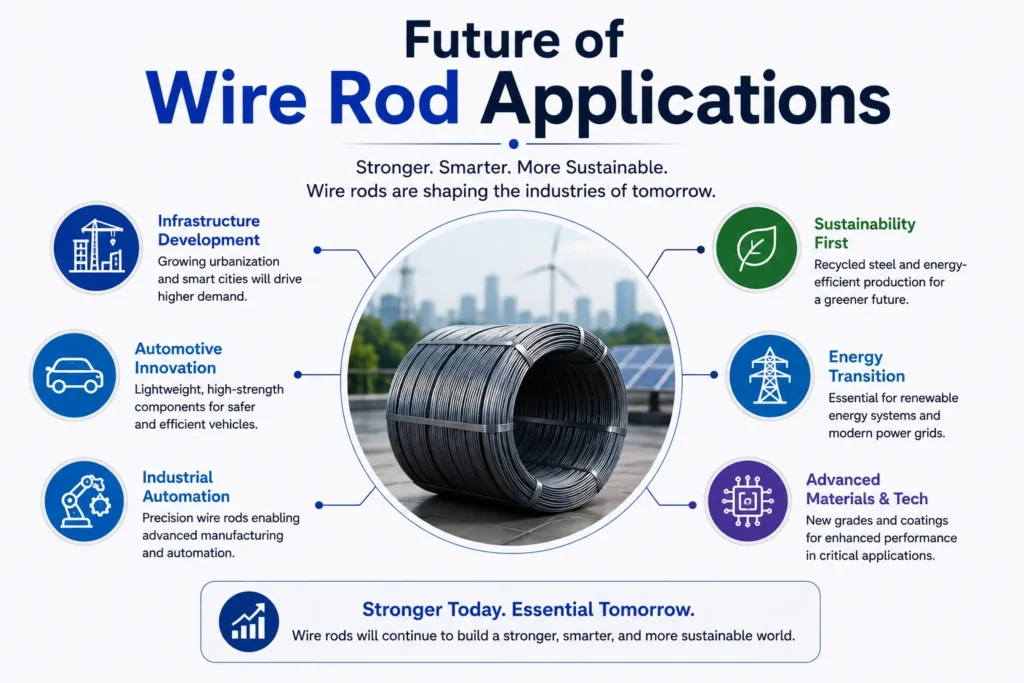
As industries continue to adopt advanced manufacturing technologies, the demand for high-quality wire rods is increasing.
Modern infrastructure projects, automotive manufacturing, renewable energy, and industrial engineering all require reliable raw materials. Manufacturers are now focusing on producing wire rods with better consistency, improved strength, and enhanced processability to meet these evolving requirements.
Quality You Can Trust
When sourcing wire rods or steel products, always verify the manufacturer’s certifications before making a purchase. Manufacturers with ISO-certified quality management systems and BIS/ISI-certified products (where applicable) demonstrate a stronger commitment to quality, consistency, and customer satisfaction. Choosing certified products helps reduce risk and ensures better performance in industrial and construction applications.
Conclusion
Choosing the right wire rod involves much more than comparing prices. Factors such as steel grade, surface quality, diameter accuracy, strength, manufacturing consistency, and corrosion resistance all contribute to the quality of the final product.
Equally important is selecting a manufacturer that follows recognized quality standards. Purchasing from an ISO-certified manufacturer gives buyers greater confidence that the product has been manufactured under controlled quality processes and tested to meet industry requirements.
Whether your requirement is for construction or industrial manufacturing, investing in quality-certified products helps improve efficiency, reduce production issues, and ensure long-term performance.
A little extra attention during the buying process can save significant costs and prevent quality-related problems in the future.
Frequently Asked Questions
Wire rods are used to manufacture products such as GI wire, binding wire, wire mesh, nails, fencing wire, springs, fasteners, and many other industrial components.
Consider the application, steel grade, diameter, surface quality, strength, and the reputation of the manufacturer before making a purchase.
A smooth and defect-free surface improves processing, reduces wire breakage, and enhances the quality of the finished product.
No. Wire rods differ in grade, diameter, chemical composition, strength, and intended applications.
Construction, automotive, engineering, manufacturing, infrastructure, agriculture, and electrical industries all use wire rods.
Check for consistent diameter, clean surface finish, proper testing, and compliance with industry standards.
Reliable manufacturers ensure consistent quality, proper testing, timely supply, and better overall product performance.
Yes. Wire rods are widely used as the base material for manufacturing galvanized iron (GI) wire.
Store them in a dry, covered area away from moisture and direct ground contact to prevent corrosion.
Yes. High-quality wire rods result in stronger, more durable, and more reliable finished products.


