


270 GSM GI Wire vs Standard GI Wire
When people buy GI wire, they often focus on wire thickness, price, or supplier reputation. However, one factor that makes a significant difference in the actual life of the wire is the zinc coating. This is where terms like “270 GSM GI Wire” and “Standard GI Wire” come into the picture.
Many buyers come across these terms but are not always sure what they mean or which option is better for their project. The truth is that both wires have their place, but choosing the wrong one can lead to unnecessary maintenance costs, faster corrosion, and a shorter service life.
In this article, we’ll look at the practical differences between 270 GSM GI Wire and Standard GI Wire in simple language, helping you make a better buying decision.
Understanding GI Wire
GI Wire stands for Galvanized Iron Wire. It is a steel wire coated with zinc to protect it from rust and corrosion.
Without zinc coating, steel wire exposed to moisture, humidity, chemicals, or changing weather conditions would begin to rust relatively quickly. The zinc layer acts as a protective shield that helps extend the wire’s lifespan.
GI wire is widely used in:
- Fencing
- Agriculture
- Construction
- Poultry farms
- Industrial applications
- Wire mesh manufacturing
- Cable armoring
- Vineyard and orchard support systems
While all GI wires are galvanized, the amount of zinc coating can vary significantly.
What Does 270 GSM Mean?
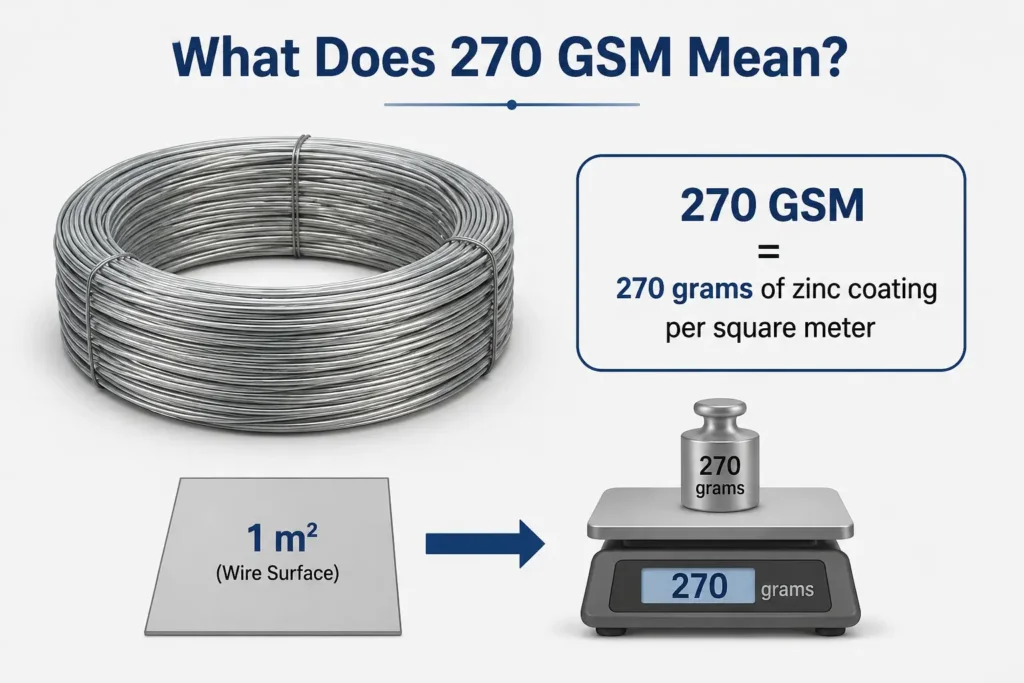
GSM stands for “Grams per Square Meter.”
In simple terms, it refers to the amount of zinc coating applied to the wire surface.
A 270 GSM GI Wire contains approximately 270 grams of zinc coating per square meter of wire surface.
The higher the GSM value, the thicker the zinc protection layer.
This means:
- Better corrosion resistance
- Longer life expectancy
- Improved durability
- Reduced maintenance requirements
Many people assume all GI wires are the same, but the zinc coating level can make a major difference in performance.
What Is Standard GI Wire?
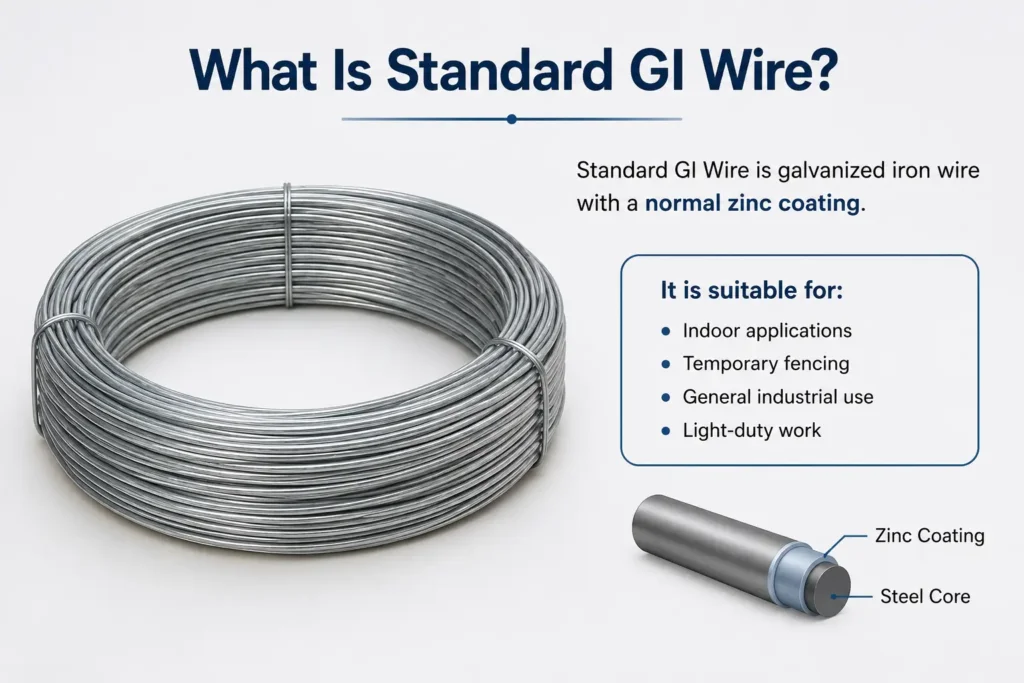
Standard GI Wire generally comes with a lower zinc coating compared to 270 GSM wire.
The exact coating may vary depending on the manufacturer and intended application.
Standard GI wire is commonly used in applications where:
- Environmental exposure is limited
- Corrosion risk is low
- Budget is a major consideration
- Long-term durability is not the primary requirement
For indoor or temporary applications, standard GI wire often performs satisfactorily.
Key Difference: Zinc Protection
The biggest difference between the two products is the amount of zinc protection.
A thicker zinc layer creates a stronger barrier between the steel wire and external environmental conditions.
When exposed to rain, humidity, pollution, industrial chemicals, or coastal air, wires with higher zinc coating generally last much longer.
This is one of the reasons why 270 GSM GI Wire is often preferred for demanding outdoor applications.
Corrosion Resistance Comparison
Corrosion is the biggest enemy of steel wire.
When the zinc coating begins to wear away, rust starts attacking the steel underneath.
270 GSM GI Wire offers greater resistance against:
- Rainwater exposure
- Humid climates
- Coastal environments
- Industrial pollution
- Chemical exposure
Standard GI Wire may perform well under normal conditions but can deteriorate faster in aggressive environments.
For projects where durability matters, higher zinc coating usually provides better long-term value.
Durability and Service Life
A wire’s life is not determined by its steel alone.
The protective coating plays an equally important role.
In many outdoor installations, 270 GSM GI Wire continues performing effectively long after standard GI wire begins showing signs of wear.
This longer service life can reduce:
- Replacement costs
- Maintenance expenses
- Downtime
- Labor costs
While the initial purchase cost may be slightly higher, the long-term savings often justify the investment.
Strength Comparison
Many buyers believe higher GSM automatically means stronger wire.
This is not entirely accurate.
The mechanical strength of GI wire primarily depends on:
- Steel quality
- Manufacturing process
- Wire diameter
- Tensile strength
The zinc coating mainly affects corrosion resistance rather than the actual load-bearing strength.
However, because the wire remains protected for longer, it can maintain its structural integrity over an extended period.
Applications of 270 GSM GI Wire
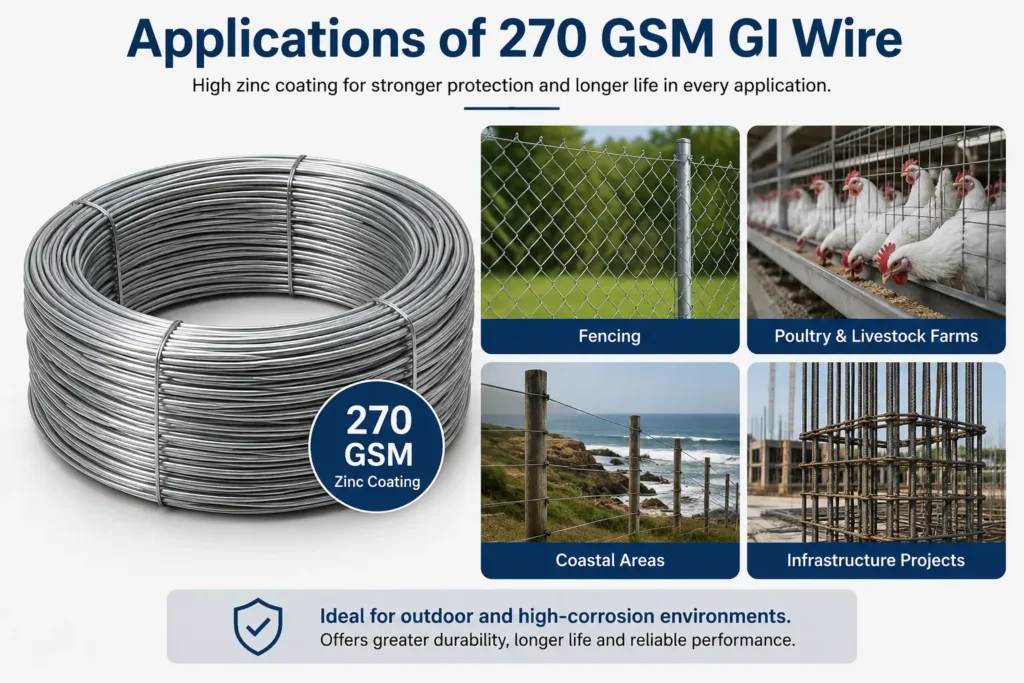
270 GSM GI Wire is commonly used in:
Fencing Projects
Agricultural fencing, boundary fencing, and security fencing often remain exposed to weather throughout the year.
A thicker zinc coating helps increase longevity.
Poultry and Livestock Farms
Farm environments can expose wire to moisture and chemicals regularly.
Higher zinc protection becomes highly beneficial.
Coastal Regions
Areas near the sea experience higher salt content in the air, accelerating corrosion.
270 GSM wire performs better under such conditions.
Infrastructure Projects
Government and infrastructure projects often require durable materials capable of delivering long-term performance.
Applications of Standard GI Wire
Standard GI Wire is suitable for:
- Temporary fencing
- Indoor applications
- Packaging
- General industrial usage
- Light-duty construction work
Where environmental exposure is limited, standard GI wire can be a practical and cost-effective solution.
Cost Comparison
One of the main reasons buyers choose standard GI wire is cost.
Since it contains less zinc coating, it is usually available at a lower price.
However, purchase price should not be the only factor considered.
A cheaper wire that needs replacement sooner may eventually cost more than a premium wire that lasts significantly longer.
Many experienced project managers focus on lifecycle cost rather than initial cost alone.
Which One Should You Choose?
The answer depends on your application.
Choose 270 GSM GI Wire if:
- The wire will remain outdoors for years.
- You need maximum corrosion resistance.
- The project is located in a coastal area.
- Long-term durability is important.
- You want lower maintenance costs.
Choose Standard GI Wire if:
- The application is temporary.
- Exposure to moisture is limited.
- Budget is the primary concern.
- Long-term durability is not critical.
Final Thoughts
At first glance, 270 GSM GI Wire and Standard GI Wire may look almost identical. However, the difference becomes evident over time.
The additional zinc coating in 270 GSM GI Wire provides stronger protection against corrosion, extends service life, and reduces maintenance requirements. For projects where durability matters, it often proves to be the more economical choice in the long run.
Standard GI Wire continues to be a useful option for many everyday applications, especially where environmental exposure is low and cost control is important.
The right choice ultimately depends on your project’s requirements, operating conditions, and expected lifespan.
Frequently Asked Questions
270 GSM refers to approximately 270 grams of zinc coating per square meter of wire surface.
For outdoor and corrosion-prone environments, 270 GSM GI Wire generally offers better durability and longer service life.
Not necessarily. GSM indicates zinc coating thickness, while strength depends mainly on steel quality and manufacturing specifications.
Yes. It is widely used in agricultural, industrial, and security fencing because of its superior corrosion resistance.
Zinc acts as a protective barrier that helps prevent rust and extends the life of the steel wire.
Yes, but its lifespan may be shorter than higher-coated GI wire when exposed to harsh weather conditions
Looking for Reliable Steel Solutions?
When it comes to construction materials, quality should never be compromised. Sunvik Steels Pvt Ltd is committed to delivering high-quality steel products designed to meet the demands of modern infrastructure and construction projects.
Whether you’re planning residential, commercial, or industrial projects, choosing trusted materials can make a significant difference in long-term performance and safety.
To learn more about premium steel solutions, visit Sunvik Steels Pvt Ltd and explore products built for strength, reliability, and durability.


