


550D TMT Bars
Building a house or any commercial structure is one of the biggest investments people make. Whether it’s a dream home, an office building, a warehouse, or a factory, everyone wants the structure to last for many years. Cement, bricks, and aggregates all play an important role, but one material that quietly carries the load of the entire structure is the TMT bar.
People often spend weeks choosing tiles, paints, and interior designs, but when it comes to reinforcement bars, many simply buy what the contractor suggests or go for the cheapest option available. This approach can become costly in the long run because the strength of a building largely depends on the quality of the steel used.
Among the different grades available in the market, 550D TMT Bars have become a preferred choice for many construction projects. They offer a combination of strength and flexibility, making them suitable for various applications. However, not every 550D TMT Barsr available in the market offers the same level of quality.
If you are planning to purchase 550D TMT bars, there are several important factors that deserve your attention.
Understanding TMT 550D Bars
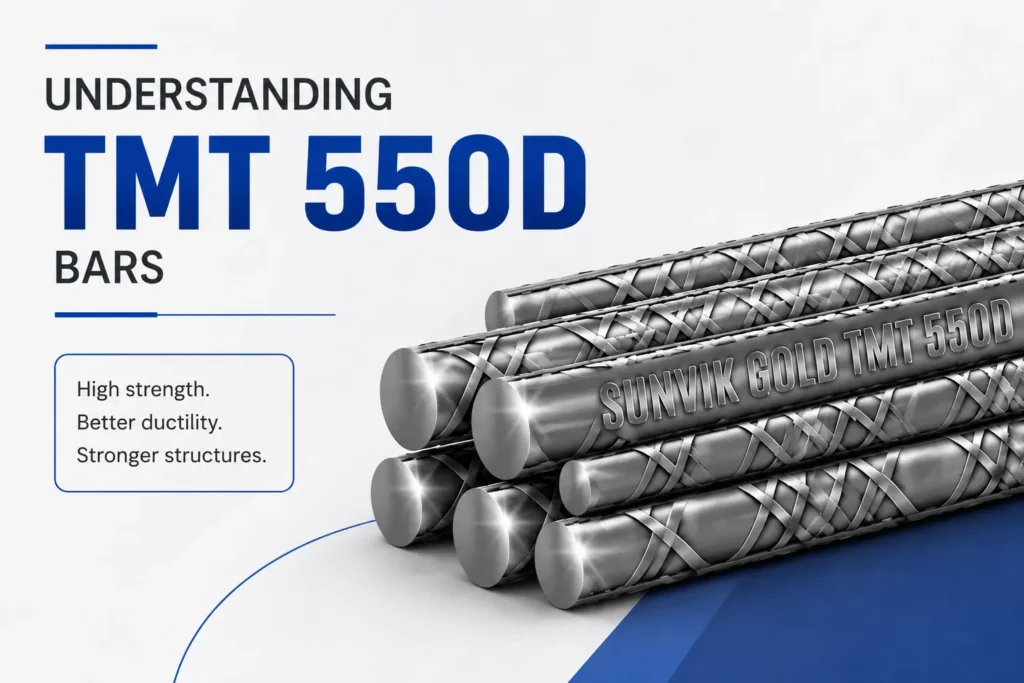
Before discussing the buying factors, it helps to understand what 550D TMT bars actually are.
TMT stands for Thermo Mechanically Treated bars. These steel bars undergo a special manufacturing process where they are rapidly cooled after rolling and then allowed to self-temper. This process creates a tough outer layer while maintaining a ductile inner core.
The number 550 represents the minimum yield strength of the bar measured in megapascals.
The letter D stands for ductility. Higher ductility means the bar can absorb stress and deformation without sudden failure.
This combination of strength and flexibility makes 550D TMT Bars suitable for modern construction projects.
Why Quality Matters More Than Price
When people purchase construction materials, price often becomes the first consideration.
Saving a small amount during construction may seem attractive, but poor-quality reinforcement can create expensive maintenance issues later.
A high-quality TMT bar can provide:
- Better structural stability.
- Improved earthquake resistance.
- Greater load-bearing capacity.
- Reduced maintenance.
- Longer building life.
The cost difference between standard and premium-quality bars may appear significant initially, but over the lifespan of a structure, quality often proves to be the better investment.
Check the Manufacturing Process
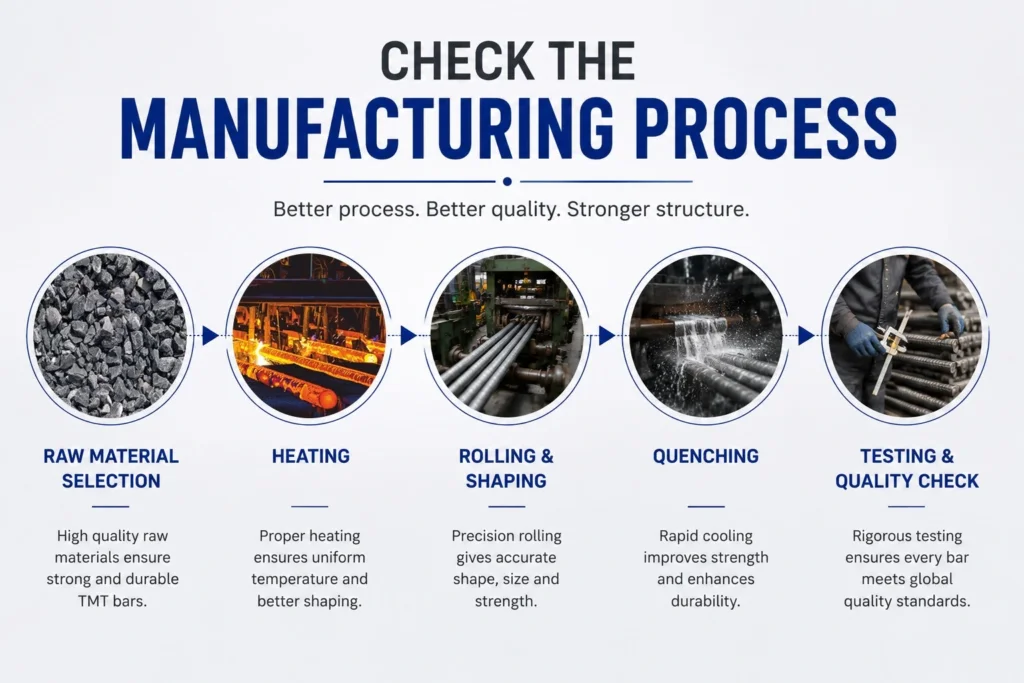
The quality of a TMT bar begins during production.
Modern manufacturing technology helps maintain consistency in strength and performance.
Bars produced under controlled conditions usually have:
- Uniform strength.
- Better surface finish.
- Consistent dimensions.
- Improved ductility.
Buyers should look for manufacturers that follow established production standards and maintain quality control throughout the process.
Verify the Grade
Many buyers simply ask for TMT bars without checking the grade.
Different grades are designed for different applications.
TMT 550D bars are commonly chosen because they provide a balance between strength and flexibility.
Always verify that the supplied bars match the required grade for the project.
Proper identification markings on the bar can help confirm authenticity.
Check Ductility
Strength alone is not enough.
A building also needs flexibility to handle changing loads and environmental conditions.
Ductility allows steel bars to bend under stress instead of breaking suddenly.
This property becomes especially important during:
- Earthquakes.
- High winds.
- Heavy traffic vibrations.
- Structural movement.
Good ductility helps buildings absorb energy more effectively.
Surface Condition of the Bar
Many buyers overlook the appearance of the steel.
A quality TMT bar should have a clean and uniform surface.
Check for:
- Visible cracks.
- Surface defects.
- Rust patches.
- Irregular ribs.
- Uneven rolling marks.
A proper surface finish contributes to better bonding with concrete.
Rib Pattern
The raised ribs on TMT bars are not simply for appearance.
These ribs improve the grip between steel and concrete.
A good rib pattern helps prevent slipping and increases structural stability.
Uniform rib spacing indicates better manufacturing consistency.
Corrosion Resistance
Moisture is one of the biggest challenges in construction.
Steel exposed to water and humidity can corrode over time.
Corrosion weakens reinforcement and affects structural integrity.
High-quality 550D TMT Bars often provide better resistance to corrosion, making them suitable for different environmental conditions.
This becomes particularly important in coastal and humid regions.
Weldability
Modern construction often requires welding.
Poor-quality steel may develop cracks during welding operations.
550D TMT Bars generally offer good weldability without compromising strength.
This simplifies fabrication work and improves construction efficiency.
Check Dimensions
Consistency in diameter is important.
Variations in thickness can affect structural calculations and material requirements.
Buyers should ensure the bars meet specified dimensions and tolerances.
Accurate dimensions also simplify installation.
Weight Consistency
Weight is another factor that should not be ignored.
Underweight bars may indicate lower material usage.
Always compare actual weight with standard specifications.
Consistent weight reflects better manufacturing quality.
Certification and Standards
Reliable manufacturers usually produce bars according to recognised industry standards.
Quality certifications provide confidence regarding manufacturing practices and testing procedures.
Ask suppliers about quality documentation before making a purchase.
Flexibility Test
A simple bend test can reveal useful information.
Quality TMT bars should bend without developing visible cracks.
This demonstrates good ductility and manufacturing quality.
Although professional laboratory tests provide more accurate results, basic field observations can still help buyers.
Supplier Reputation
The supplier matters almost as much as the product itself.
Established suppliers generally maintain better storage practices and quality standards.
Before purchasing:
- Check market reputation.
- Ask for references.
- Read customer feedback.
- Verify product availability.
A trustworthy supplier can reduce the risk of receiving substandard material.
Storage Conditions
Even quality steel can deteriorate if stored improperly.
TMT bars should be stored:
- Above ground level.
- Away from standing water.
- Protected from excessive moisture.
- Organised according to size.
Proper storage maintains product quality until installation.
Consider Project Requirements
Not every project has identical requirements.
A residential house may require different reinforcement planning compared to a commercial building or industrial facility.
Consulting structural engineers helps determine the appropriate specifications.
Choosing the right material according to project needs improves both safety and cost efficiency.
Common Buying Mistakes
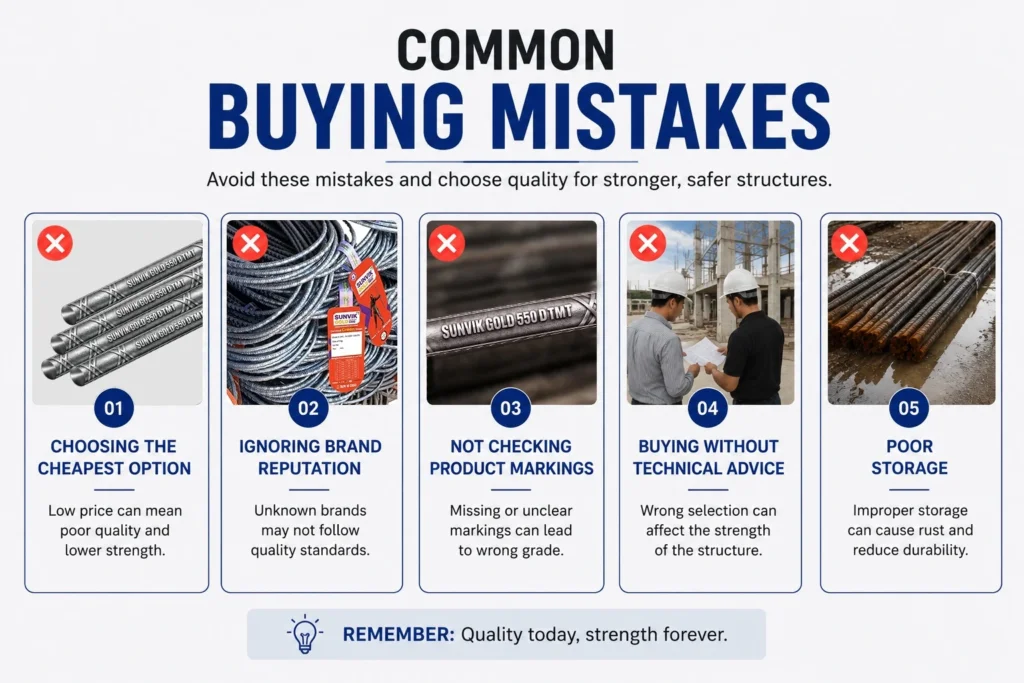
Many buyers make similar mistakes during purchasing.
Choosing the Cheapest Option
Low prices can sometimes indicate compromised quality.
Ignoring Brand Reputation
Established manufacturers often maintain stricter quality controls.
Not Checking Product Markings
Authentic identification helps avoid counterfeit products.
Buying Without Technical Advice
Professional guidance reduces the risk of incorrect selection.
Poor Storage
Improper handling before installation can reduce product performance.
Why TMT 550D Bars Are Popular
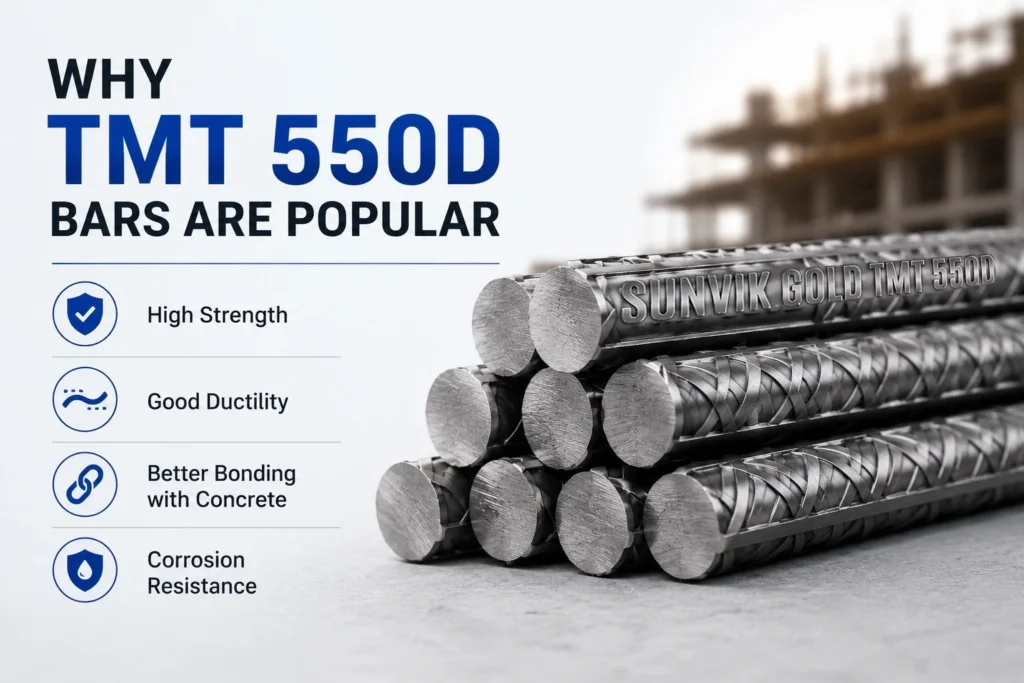
Builders and engineers often choose 550D TMT bars because they offer practical advantages.
These include:
- High strength.
- Good ductility.
- Better earthquake performance.
- Excellent concrete bonding.
- Good weldability.
- Improved corrosion resistance.
- Reliable long-term performance.
These qualities make them suitable for residential, commercial, and infrastructure projects.
Final Thoughts
Purchasing 550D TMT Bars should not be treated as a routine buying decision. The quality of reinforcement directly affects the strength, durability, and safety of a structure.
While price is always an important consideration, factors such as manufacturing quality, ductility, corrosion resistance, dimensions, certification, and supplier reliability deserve equal attention.
Taking time to evaluate these factors can help avoid future repairs and maintenance costs while improving the overall performance of the building.
A well-informed decision today can contribute to a stronger and safer structure for many years.
Frequently Asked Questions
They are thermo mechanically treated steel reinforcement bars with high strength and improved ductility for construction applications.
They provide strength, flexibility, and durability for residential and commercial structures.
It represents improved ductility, which helps the bar withstand stress and deformation.
Their ductile properties make them suitable for structures designed to handle seismic activity.
Check product markings, surface finish, rib pattern, weight, dimensions, and certifications.
Quality bars are designed to offer improved resistance to corrosion under normal conditions.
Yes, they generally offer good weldability for construction applications.
Ductility helps structures absorb stress without sudden failure.
Yes, reliable suppliers often maintain better quality standards and storage practices.
Yes, they are widely used in residential, commercial, and infrastructure projects.
Looking for Reliable TMT Bars for Your Construction Project?
Choosing quality reinforcement is an important step in building safe and durable structures. Whether you are constructing a home, commercial building, or industrial project, selecting dependable TMT bars can make a significant difference in long-term performance.
Sunvik Steels Pvt Ltd offers TMT bars designed to meet modern construction requirements with a focus on strength, durability, and quality. By choosing reliable construction materials from trusted manufacturers, builders and homeowners can work towards creating stronger and longer-lasting structures.
Before starting your next project, take time to understand your reinforcement needs and select materials that support both safety and long-term value.


