PVC Coated Fencing vs Non-Coated Fencing:
When people plan fencing for a property, most of the attention usually goes to cost. It is normal. Whether it is a factory boundary, a residential plot, farmland, or a commercial site, everyone wants a solution that feels practical and fits the budget. Because of this, many buyers often compare only the purchase price of fencing materials and make quick decisions based on what seems cheaper.
But fencing is not like something you replace every year. It is expected to stand outdoors through heat, rain, dust, moisture, and daily exposure for many years. This is why the real value of fencing should never be judged only by its initial cost. What matters more is how well it performs after installation and how much maintenance it demands over time.
This is where the comparison between PVC coated fencing and non-coated fencing becomes important. At first glance, both may look similar because both are designed to create boundaries and provide security. But once they are installed and exposed to real outdoor conditions, the difference becomes very noticeable.
Understanding this difference helps buyers make smarter decisions that save both money and maintenance effort in the long run.
Understanding What PVC Coated Fencing Really Is
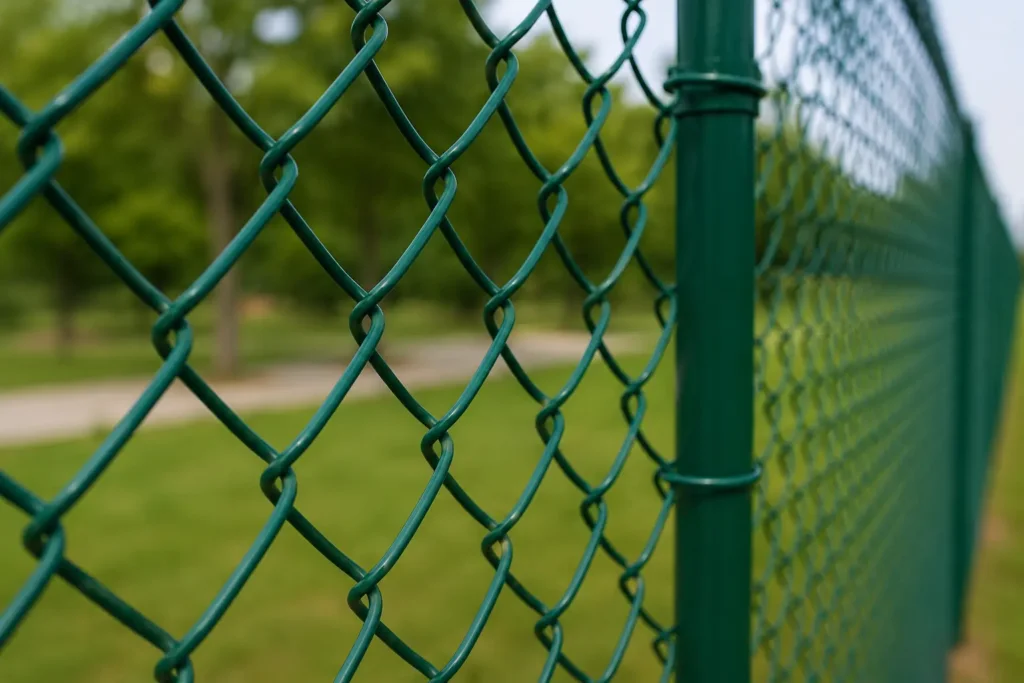
PVC coated fencing is made using galvanized steel wire that is covered with an outer PVC layer. This outer coating acts as a protective barrier that shields the steel from direct exposure to moisture, changing weather conditions, and environmental corrosion.
This additional protection increases the product’s life significantly. The coating also gives the fencing a smoother and more finished appearance, which is why it is commonly used in places where both durability and visual appeal matter.
You will often find PVC coated fencing installed around premium residential properties, industrial compounds, landscaped gardens, schools, parks, and agricultural lands. Buyers usually choose it because they want a fencing solution that looks clean for years without demanding constant maintenance.
The coating also adds resistance against scratches and minor physical wear, which improves overall durability.
What Non-Coated Fencing Offers
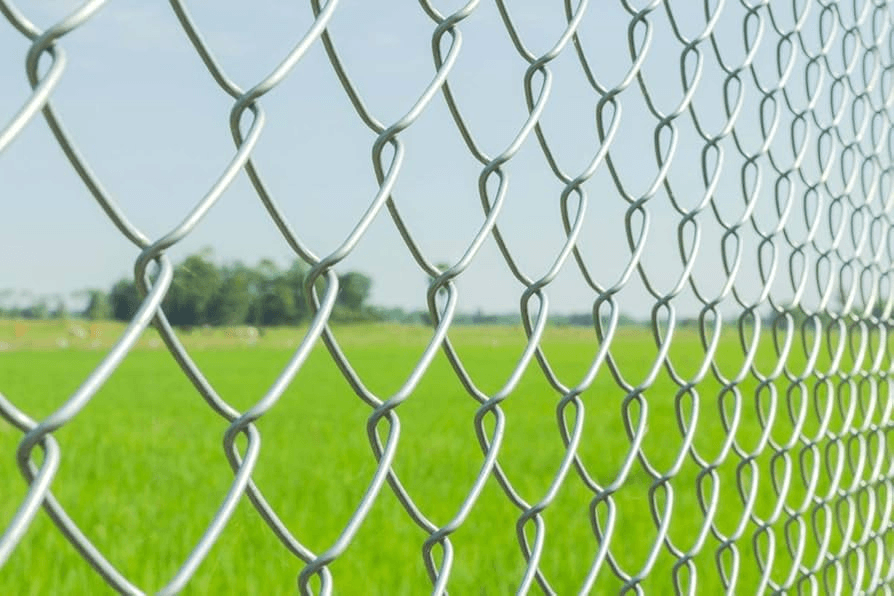
Non-coated fencing is much simpler in design. It is steel wire fencing without the extra PVC protective layer. Depending on the product, it may be galvanized or plain metal, but it does not have the additional outer shield that protects against direct environmental exposure.
Its biggest advantage is affordability. The lower purchase cost makes it attractive for projects where budget is the primary concern.
It is often used in temporary construction sites, low-budget installations, and places where long-term appearance is not a major priority.
For short-term use, non-coated fencing can perform reasonably well. But when exposed to outdoor weather for years, its limitations become clear.
Without outer protection, the steel surface remains vulnerable to moisture and oxidation. Over time, this leads to rust formation, discoloration, surface weakening, and eventually structural deterioration.
This is usually where replacement or repair costs begin to increase.
Why Weather Exposure Changes Everything
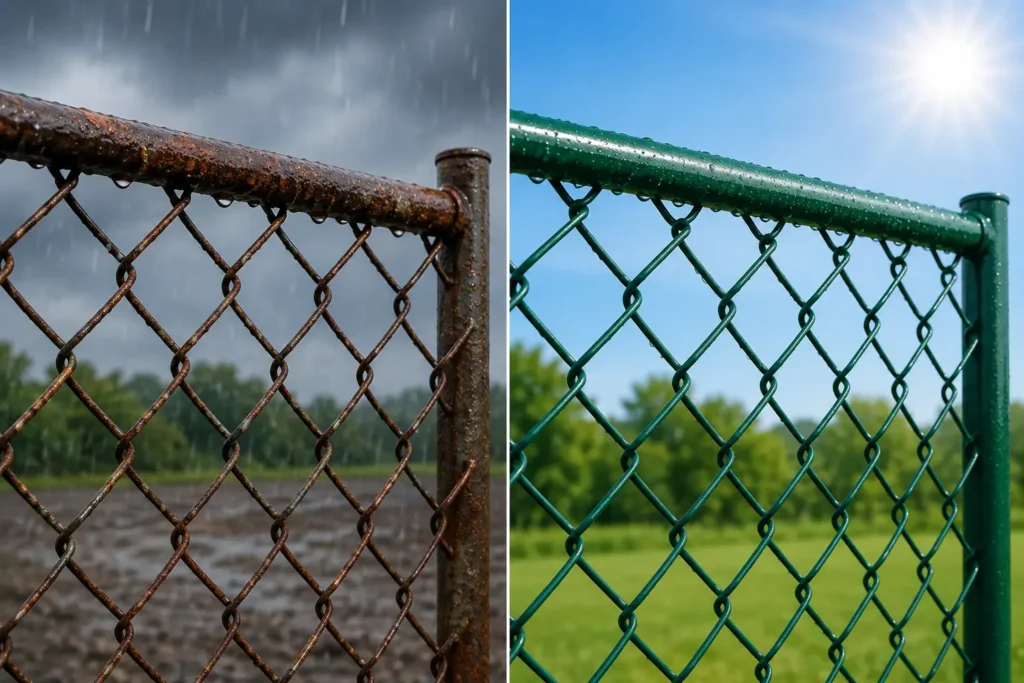
Fencing spends its entire life outdoors. Unlike indoor construction materials, it continuously faces harsh environmental conditions.
Rainwater, humidity, direct sunlight, temperature fluctuations, air pollution, and dust all slowly affect metal surfaces.
For non-coated fencing, this exposure directly attacks the steel. Rust does not appear immediately. It starts slowly, often as minor surface discoloration that many people ignore. But as moisture continues to interact with the metal, corrosion deepens and weakens the structure.
Small rust patches gradually become larger damaged areas.
Eventually, the fencing begins losing strength.
PVC coated fencing performs much better because the outer coating blocks direct moisture contact. This delays oxidation and protects the internal steel from corrosion.
This one feature alone can significantly increase service life.
That is why PVC coated fencing is often preferred in regions with frequent rainfall or high humidity, where corrosion develops faster.
The Difference in Maintenance Costs
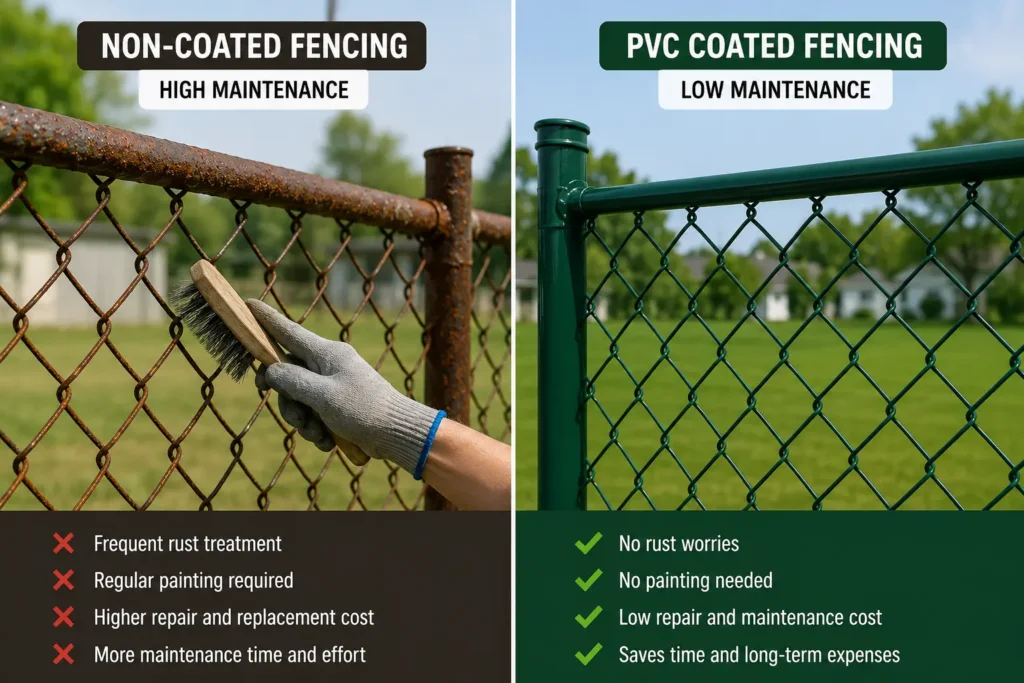
This is where many buyers truly understand the value difference.
At the time of purchase, non-coated fencing feels economical. But over several years, maintenance expenses can quietly increase.
Surface rust treatment, repainting, repairs, and damaged section replacement all add cost.
For large fencing projects, these repeated expenses become significant.
PVC coated fencing usually requires far less maintenance. Since the steel stays protected, there is little need for repainting or regular anti-rust treatment.
Most owners only need occasional cleaning to keep the surface looking fresh.
This lower maintenance requirement makes coated fencing more cost-efficient over time, even if the initial price is slightly higher.
This is why experienced project planners often focus on lifecycle value rather than purchase cost alone.
Why Appearance Matters More Than Many Buyers Realize
Fencing does more than provide security.
It shapes how a property looks from the outside.
A rusted or faded fence can make even a well-maintained property feel neglected. This matters especially for commercial spaces, residential communities, schools, and industrial entrances where first impressions influence perception.
PVC coated fencing retains a cleaner and more polished look for much longer. Its uniform finish continues to look professional even after years of exposure.
Non-coated fencing often loses visual appeal earlier as rust and discoloration begin to show.
For projects where appearance matters, this difference becomes important.
The Common Mistake Buyers Often Make
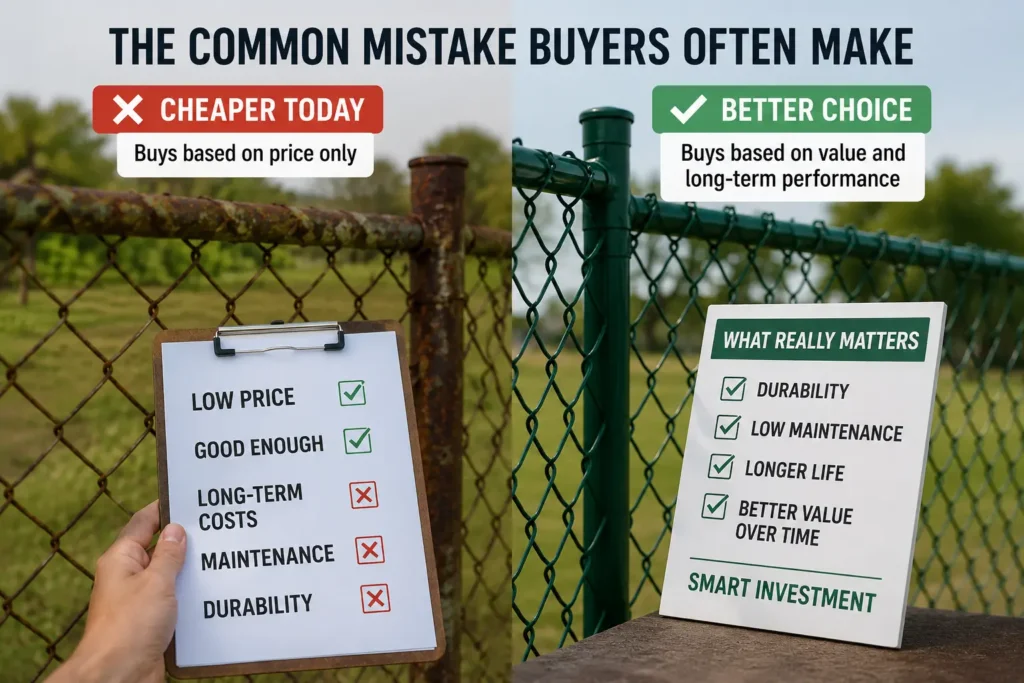
One of the most common assumptions is that all steel fencing performs similarly.
Buyers often believe paying extra for coated fencing is unnecessary.
This assumption usually comes from comparing products only at the time of purchase rather than considering years of use.
A cheaper fencing solution that requires repeated repair, repainting, and earlier replacement can easily become more expensive than a premium fencing option that lasts longer with minimal maintenance.
Construction decisions should always consider total ownership cost, not just starting price.
This is something experienced builders understand very well.
Why Manufacturing Quality Matters
Even PVC coated fencing is only as strong as the manufacturing standards behind it.
Poor-quality production can result in uneven coating, weak bonding, cracks, peeling, and reduced durability.
That is why choosing a reliable steel manufacturer matters.
A properly engineered fencing product depends on:
Strong steel base material
Consistent galvanization
Uniform PVC thickness
Proper coating adhesion
Precision production standards
Without these, even coated fencing can fail early.
This is why serious buyers choose trusted manufacturers rather than unknown low-cost suppliers.
Quick Comparison Table
| Feature | PVC Coated Fencing | Non-Coated Fencing |
| Rust Resistance | Excellent | Moderate |
| Life Span | Longer Years | Less Years |
| Maintenance | Very Low | High |
| Appearance | Premium Finish | Basic Look |
| Cost Initially | Higher | Lower |
| Long-Term Value | Better | Average |
The table clearly shows why many buyers prefer coated fencing today.
Why Sunvik Steels Is a Reliable Choice
The quality of any fencing solution begins with steel quality.
This is where Sunvik Steels Pvt Ltd has built strong trust across industries.
Sunvik focuses on delivering dependable steel products designed for practical performance. Their manufacturing standards prioritize durability, consistency, and long-term structural reliability.
From premium TMT bars to fencing wire solutions, their products are built for projects where quality cannot be compromised.
Instead of simply selling steel, the focus remains on creating materials that continue performing year after year under real conditions.
You can explore their complete range here:
Final Thoughts
Choosing between PVC coated fencing and non-coated fencing depends on what you expect from the product.
If your requirement is temporary use with minimum upfront spending, non-coated fencing may work well enough.
But if your goal is long-term durability, lower maintenance, stronger weather resDstance, and a better-looking property boundary, PVC coated fencing is usually the smarter investment.
Sometimes paying slightly more today prevents much larger costs tomorrow.
And in construction, that is often the better decision.
FAQs
Yes. The protective coating helps prevent rust and significantly extends product life.
For long-term projects, yes. Lower maintenance usually offsets the higher initial cost.
It resists rust very effectively unless the coating is severely damaged.
Yes, especially for lower-budget or temporary installations.
PVC coated fencing usually maintains a cleaner and more premium appearance.
With proper manufacturing quality, it can last 10 to 20 years depending on conditions.
Usually no. This is one of its biggest maintenance advantages.
Yes, but additional treatment adds cost and maintenance effort.
Steel quality and manufacturing standards matter more than price alone.
Sunvik Steels Pvt Ltd offers trusted steel and fencing solutions built for long-term performance.